Motifs
Recurrence is not proof of one mechanism.
Stories across places and centuries sometimes carry similar objects, gestures, spaces, wounds, departures, names, and returns.
Similarity is worth noticing. It is not permission to erase difference.
Each motif remains attached to the story, language, culture, source, and historical world in which it appears.
No universal dictionary. No secret code.
Look for the rhyme. Keep the stories distinct.
A field, not a formula
Things that have appeared on roads
Not stages. Not a sequence a story must complete. Marks mean co-occurrence in these pages, not a universal link.
One story, many motifs
The Odyssey is not a list of stages
Motifs are things inside a story. They are not offices the story must complete. Sequence here is editorial. Each note comes from the verified edge.
Sea
The RoadSea as road that erases crew.
Cyclops
The CavePolyphemus; Calypso.
Nobody
The NameOutis / Odysseus.
Circe
The GuideCirce, Tiresias, Nausicaa, Athena.
Fleet lost
The ShipFleet, then none.
Beggar
The DisguiseBeggar in the hall; weaver in the house.
Scar
The WoundBoar scar.
Ithaca
The HomeA hall full of suitors.
Olive
The BedThe rooted olive.
The Road
A path is already an argument: that movement can be told.
Roads are not metaphors first. They are dirt, sea lanes, ice leads. A circle is only one claim.
Wandering
Odyssey
Broken
Orpheus
One way
Ovid
Still walked
Camino
The Threshold
A doorway is a change of law.
Before
Inanna dressed. Orpheus still looking forward. A guest not yet inside.
Between
Seven gates. A cave mouth. The last steps of air. Crossing is not a mood.
After
Naked to the underworld. Nobody in the dark. Eurydice falling back.
Three-zone threshold: before, between, after. Physical, social, ritual, and narrative crossings are not assumed to be the same.
The Name
To say who you are can save you. It can also spend you.
Outis
Odysseus
Nobody works in the cave. The true name, shouted from the ship, summons a god’s anger. This is one poem’s instance. Not a law of names.
The Disguise
A returned person may have to enter as someone else.
Appearance
Beggar in the hall
Athena disguises Odysseus. Gods test xenia as strangers. Covering can be the only safe form of a king in a captured house.
Practice
Weaver in the house
Penelope’s covering is speech, delay, the ruse of the shroud. Not a costume. A practice.
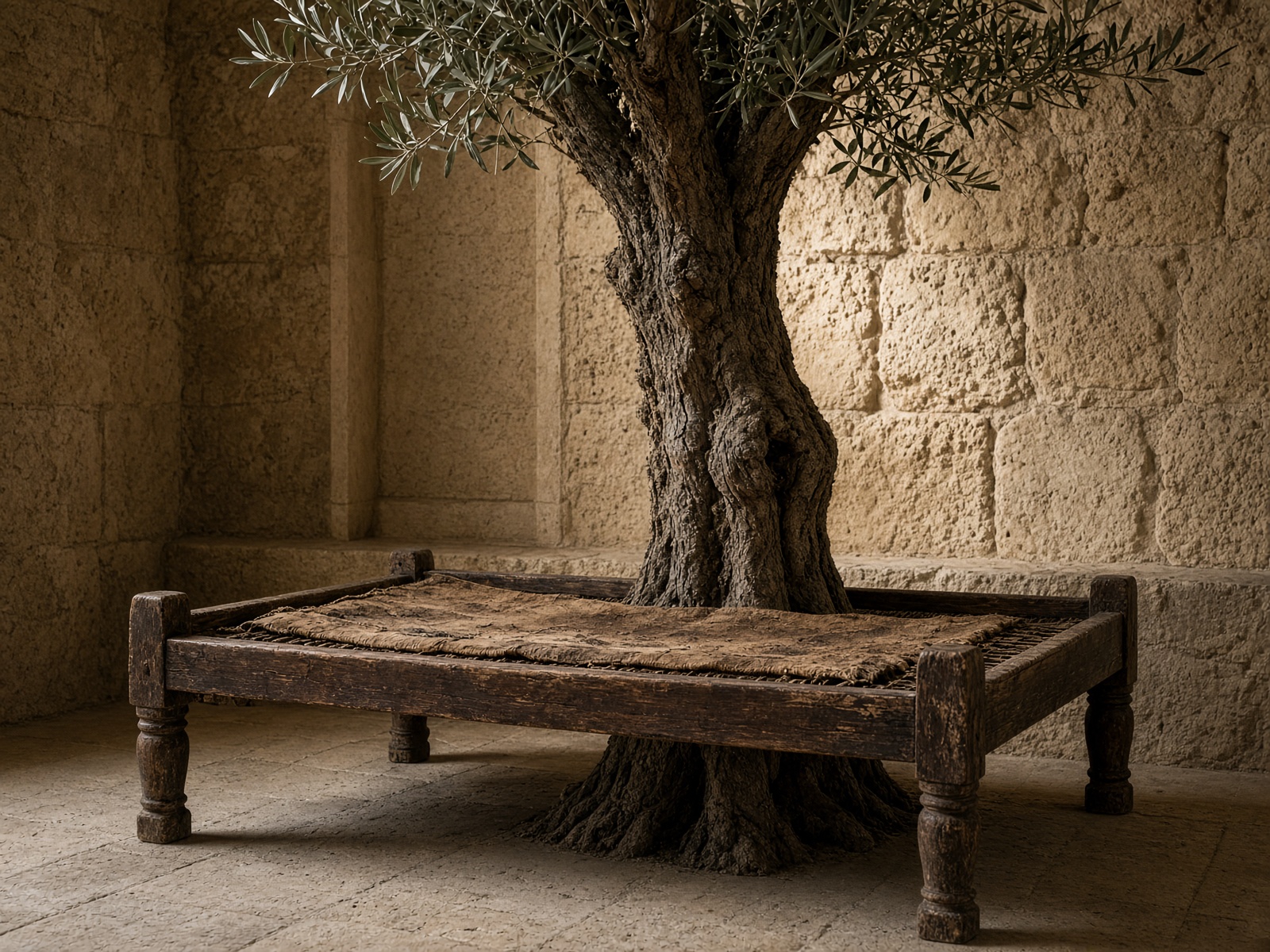
The Bed · singular
A piece of furniture that cannot be moved becomes a test of a life.
Material, construction, root, knowledge, test, recognition. One story is enough. Recurrence is not manufactured from this object.
The Return
Not every road is a circle.
Return is one possible office of a journey. Not its definition.
Circle attempted
Odyssey
Return as recognition.
Broken at the looking
Orpheus
Return emptied.
Line that does not close
Ovid
No return.
Ascent with a debt
Inanna
Someone must stay.
The Home
Home is a place that can fail to remain itself.
- What makes home still home?
- What changed while the traveler was gone?
- Who remained?
- Who controls entry?
- Who recognizes whom?
- Can home reject the person returning?
The Wound
A mark the road leaves, by which a body can later be read.
BodyA thigh. A friend’s corpse. Missing years.
EventBoar. Death in Uruk. A plant that dies over Jonah.
Later readingEurycleia knows. Gilgamesh leaves. The scar is evidence first.
The Object Carried Back
Sometimes a plant. Sometimes a shell. Sometimes nothing.
Plant
- Who
- Gilgamesh
- From
- Waters of death
- To
- Lost to a snake
Shell
- Who
- Pilgrim
- From
- Compostela
- To
- A parish
Nothing / a bed that never left
- Who
- Odysseus
- From
- The sea
- To
- Ithaca
Men
- Who
- Shackleton
- From
- Ice
- To
- A whaling station
Marks of occurrence, not scores of importance. Different cultural objects are not interchangeable symbols.
The Ship
A hull is a community that can be lost all at once.
Fleet, then none
Odyssey
Homecoming until the hulls are gone.
A fare, a storm
Jonah
Escape, then a community that will not drown a city.
Endurance
Shackleton
A named ship as character, then wreckage, then boats.
The Guide
Someone who knows a stretch of the road the traveler does not.
Circe
The way to the dead.
Tiresias
The condition of return.
Ninshubur
What to do if Inanna does not come back.
Worsley
The sextant, the last eight hundred miles.
A guide does not need to know the whole road. Names first. Not a mentor with a staff.
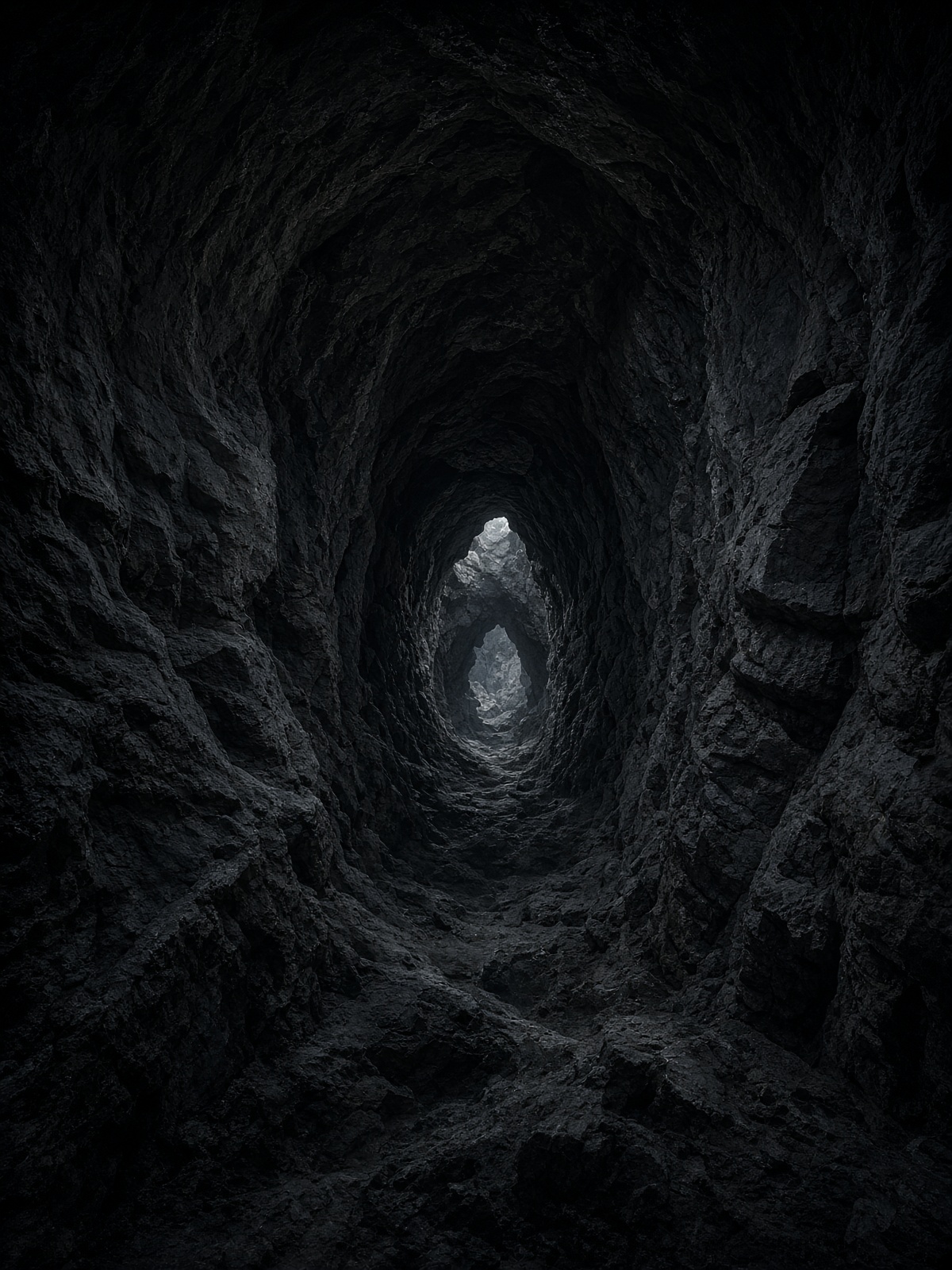
The Cave
Enclosure, scale, a door that can be a stone.
Who enters, why, by choice or force, what is inside, whether they can leave. Not, first, the unconscious.
Generated interpretation, not a historical record. Polyphemus. Calypso holds time in another cave.
One motif, many stories
The Threshold, beside itself
Same: a change of law at a lip. Different: stripping, hospitality gone wrong, a lover’s look. The similarity stops before “the unconscious” or “initiation.” The machine knows which stories contain Threshold. These three are the editor’s comparison.
Inanna
Kur
Sumerian poem
Seven gates. Each takes a worn object of office.
Odyssey
Cyclops’ cave, later the hall
Homeric epic
A stone for a door. Later, a beggar at a household door.
Orpheus
The lip of air
Virgil; Ovid
The look. Presence confirmed is presence lost.
Occurrence, not score
A mark means only that it was identified
No percentages. No significance ranking. A bronze mark: this motif has been named in this story on these pages. The note on the mark is the particular instance. Sunjata may have no marks yet. That is information, not a defect to fill.
| Story | Road | Threshold | Name | Disguise | Bed | Return | Home | Wound | Object Carried Back | Ship | Guide | Cave |
|---|---|---|---|---|---|---|---|---|---|---|---|---|
| The Odyssey | ||||||||||||
| Inanna’s Descent | · | · | · | · | · | · | · | · | · | |||
| Gilgamesh | · | · | · | · | · | · | · | · | ||||
| Orpheus | · | · | · | · | · | · | · | · | · | · | ||
| Ovid at Tomis | · | · | · | · | · | · | · | · | · | · | ||
| The Camino | · | · | · | · | · | · | · | · | · | · | ||
| Jonah | · | · | · | · | · | · | · | · | · | · | · | |
| Shackleton | · | · | · | · | · | · | · | · | · | |||
| Sunjata | · | · | · | · | · | · | · | · | · | · | · | · |
| The Wilderness | · | · | · | · | · | · | · | · | · | |||
| The Going Forth | · | · | · | · | · | · | · | · |
Recurring · 5
The RoadRecurring · 5
The ThresholdEmerging · 2
The NameSingular · 1
The DisguiseSingular · 1
The BedRecurring · 6
The ReturnRecurring · 4
The HomeEmerging · 2
The WoundEmerging · 3
The Object Carried BackEmerging · 3
The ShipEmerging · 3
The GuideSingular · 1
The Cave
Singular, Emerging, Recurring count verified appearances. They do not grade the idea. 11 roads in the current corpus.
The stories remain
Look for the rhyme. Keep the stories distinct.
Similarity is interesting. Difference remains information. A motif is not a meaning dictionary.