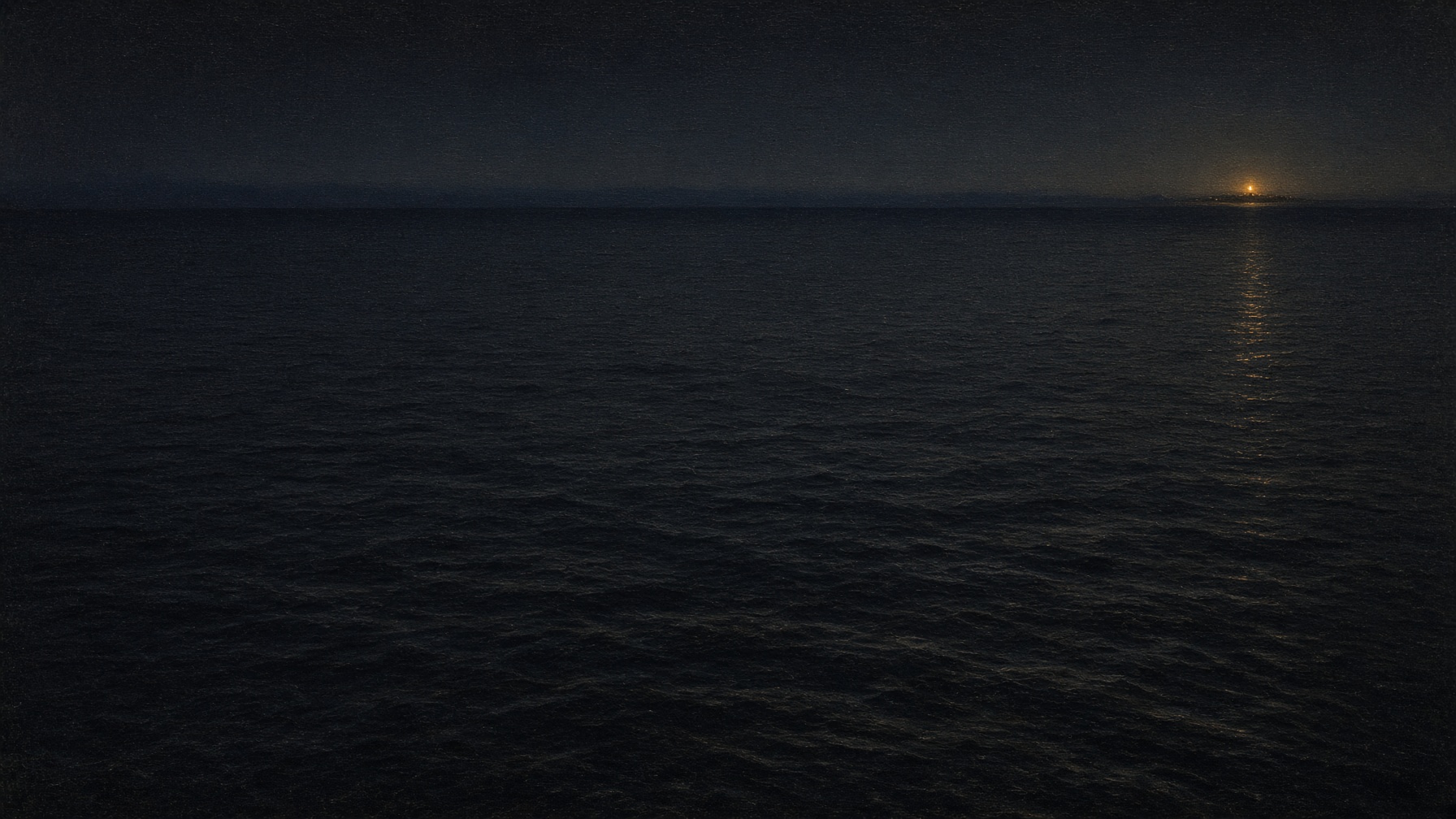
Ithaca
Twenty years away.
Ten at war. Ten trying to come home.
The poem does not open on the Cyclops. It opens on a man who cannot get home, and on a house that has been living without him.
Return, in this story, is not arrival. It is a problem of recognition. The island is still there. The marriage bed is still rooted. The dog still knows the smell of a master. The wife asks a question the face cannot answer.
He comes home. Home still asks who he is.
I. Before the road
A known world, already under strain
Household
The known world
Ithaca, in the poem, is a small rocky kingdom at the western edge of the Greek world. Its king is Odysseus, husband of Penelope, father of Telemachus. Before the ships leave for Troy, the known world is a household, a storeroom, a marriage bed built around a living olive, and a name that still matches the man who bears it.
He does not leave because a mystical call arrives. He leaves because a war of princes requires him. Later tradition says he tried to feign madness and plough the shore, and that Palamedes placed the infant Telemachus in the furrow. The Odyssey itself is quieter about the departure. What it insists on is the cost of the years that follow.
Those who remain
A second road, in place
Penelope remains. That remaining is not passivity. It is a second road, run in place, through a house filling with men who eat the stores, court the wife, and wait for the son to become old enough to kill, or to be killed.
Telemachus grows up inside a story whose protagonist is missing. His father’s absence is the weather of the house.
Do not begin with the monster. Begin with the household that will have to survive the monster’s fame.
II. The war behind the story
Troy is already over
How to become a person who can live in a house again.
κλέος
Glory
To be known. The horse. The shout from the ship. Kleos pulls toward a name that can be heard.
νόστος
Return
To live in a house again. Many of the men who sacked Troy never see home. Nostos pulls the other way.
Achilles is dead
The Iliad’s rage is finished. This page is not that poem.
The horse has been used
The same metis will later name itself Nobody in a cave.
The city has burned
What remains is the problem the war does not solve.
The fleet will not all come home
The lost ships are not decoration. They are the first accounting.
The Odyssey is a postwar poem. Odysseus leaves as a captain among captains. The man who will wash up on Scheria is no longer traveling with an army.
III. The sea
A map is a claim about a road
Some shores can be pointed to. Some can only be told.
Troy (Hisarlık)
CertainArchaeological city in northwest Anatolia; Homeric correspondence remains a scholarly argument, not a tourist fact.
Ithaca
TraditionalThe island of Ithaki in the Ionian Sea. A later proposal (Paliki peninsula, Kephalonia) remains disputed.
Pylos and Sparta
CertainTelemachus’s journey to Nestor and Menelaus uses identifiable Peloponnesian palaces of tradition.
Strait of Messina
TraditionalLater identification of Scylla and Charybdis. The poem does not give a modern chart.
Monte Circeo / Aeaea
TraditionalCirce’s island has been placed on the Italian coast. The text does not settle it.
Scheria (Phaeacia)
TraditionalOften later identified with Corfu. In the poem it is a last human shore before home, and a place of storytelling.
Ogygia
Mythic / unlocatableCalypso’s island. Later guesses (Gozo, Malta, and others) are reception, not coordinates.
The underworld
Mythic / unlocatableReached by Ocean’s edge. Not a cave on a tour map.
Mediterranean geography matters where the poem touches it: wind, current, island, strait, the real danger of a small ship. It does not follow that every episode has a GPS pin. A later American namesake of Ithaca sits near forty-two degrees north. It is not on this sea.
A line on a map is labeled for what kind of line it is. Certain. Traditional. Proposed. Mythic. Similarity of coastline is not proof.
IV. The road
The actual sequence, not twelve stages
After Troy the fleet does not travel a circle. It loses pieces of itself.
01
TraditionalCicones
A raid on the Thracian coast. The first nostos already includes plunder and a counterattack. Home is delayed by the habits of war.
02
TraditionalLotus-Eaters
A shore where forgetting is offered as kindness. Some of the crew would stay. Odysseus forces them back to the ships. Return here is an act against comfort.
03
TraditionalCyclops
A cave, a guest-right violated, a name hidden then spoken. Survival by cunning, then ruin by the need to be known.
04
Mythic / unlocatableAeolus
A bag of winds, almost home, then a mistake made in sleep and mistrust. Ithaca is sighted and lost.
05
Mythic / unlocatableLaestrygonians
A harbor that closes. The fleet is destroyed. After this, Odysseus is no longer a commander of many ships.
06
TraditionalCirce
A house that transforms guests. A year of delay that is also an education. The witch is a host, a tester, and a guide to the dead.
07
Mythic / unlocatableThe dead
Katabasis. Odysseus speaks with the dead to learn the way. The road home now requires news from those who cannot come back.
08
Mythic / unlocatableSirens
Knowledge as a sound that does not let you leave. He hears; the crew does not. Binding is the price of listening.
09
TraditionalScylla and Charybdis
Two deaths, no third way. He loses men to the cliff because the whirlpool would lose the ship.
10
Mythic / unlocatableThrinacia
The cattle of the sun. Hunger breaks the last prohibition. The remaining ship is taken by storm.
11
Mythic / unlocatableCalypso
Seven years on Ogygia. Not an adventure. Time held. Immortality offered. Home still chosen.
12
TraditionalPhaeacia
Hospitality, games, and a story told in the first person. Identity is recovered by narration before it is recovered by landfall.
13
TraditionalIthaca
Arrival in disguise. The return is not yet a homecoming.
Cave
Nobody
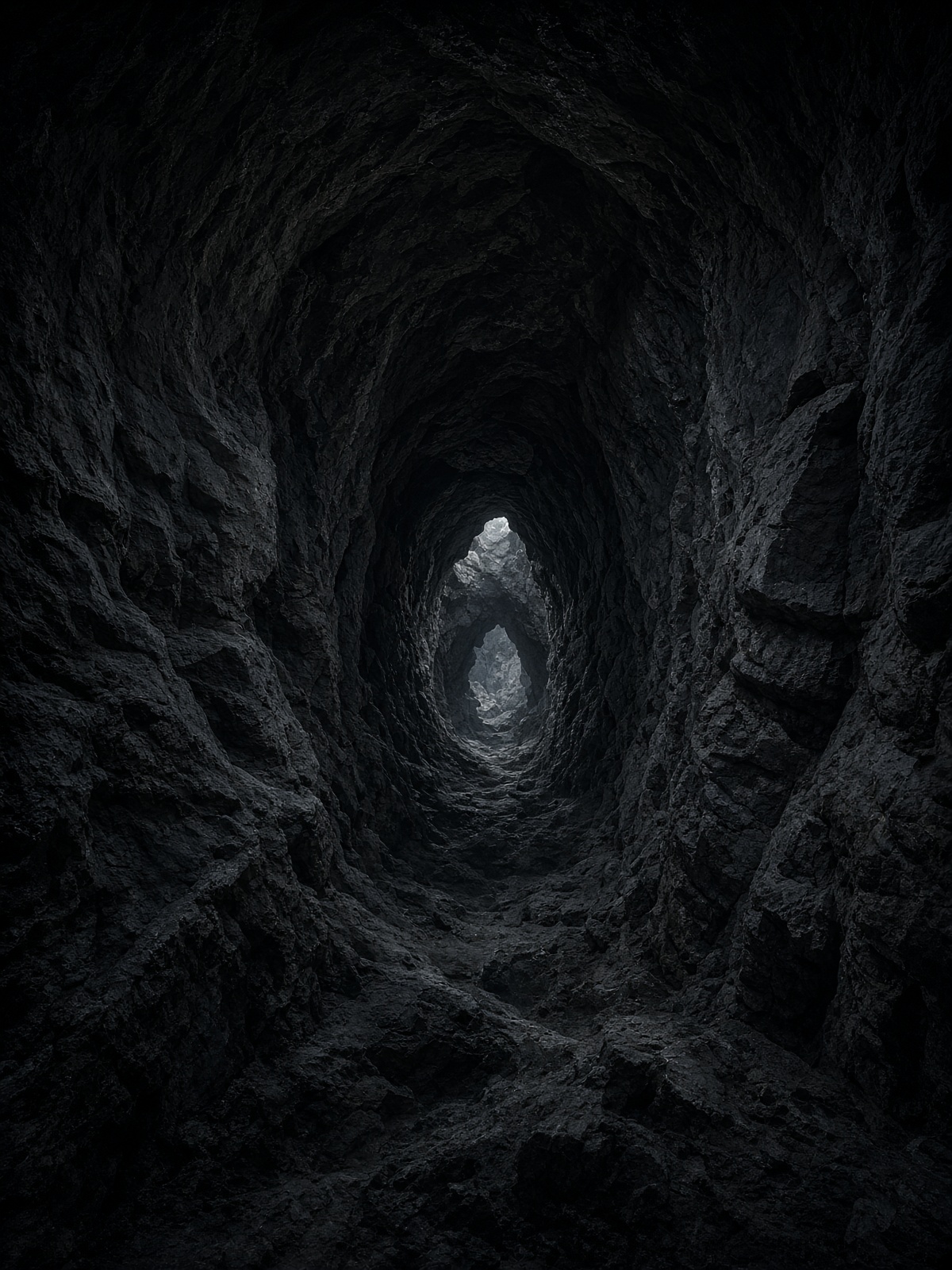
The cave is an architecture of trapping: a single opening, a stone for a door, a guest inside a host who does not honor guests. Polyphemus asks who has come. Odysseus answers with a name that is also a tactic: Outis. Nobody.
The blinding works because a community of Cyclopes, hearing a cry, can be told that Nobody is killing him. Anonymity is survival.
Then, at the threshold of escape, the man who was Nobody needs to be Odysseus again. He shouts his true name from the ship. The wound now has an author. The father of the wounded, Poseidon, now has a target. Kleos, the hunger to be known, costs years.
The poem is not a sermon against pride. It is more precise than that. It shows a mind that can hide a name and cannot bear to leave the hiding in place.
The word Nobody earns its own plate only after this story. A trick is not yet a philosophy.
Winds
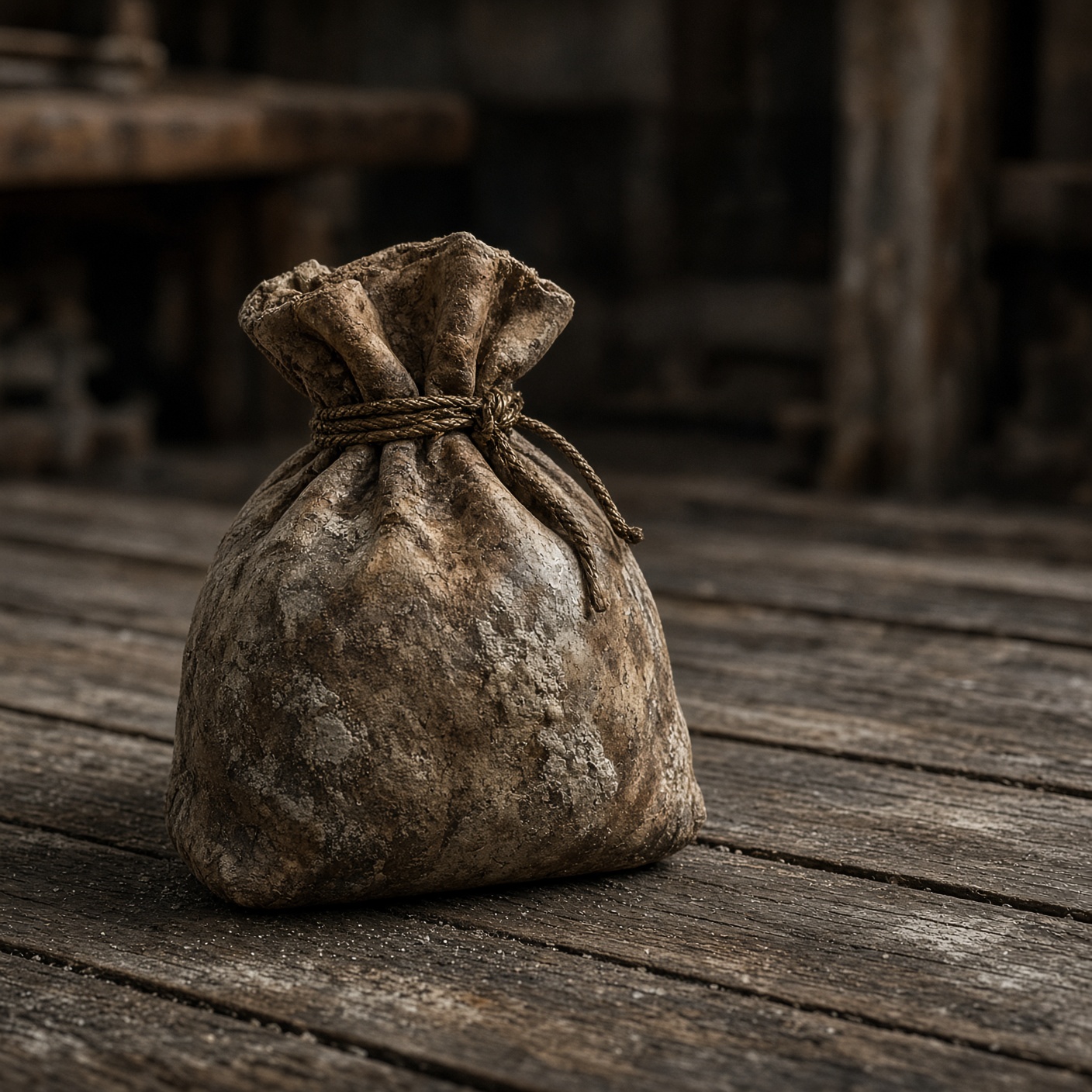
Aeolus, keeper of the winds, gives Odysseus a tied bag. Inside it is every wind except the one that would carry them home. Ithaca comes into sight. The crew, suspecting treasure, opens the bag while the captain sleeps.
The object carries four things at once: a gift, a secret, a mistrust, and a distance that reopens in an instant. They are blown back to the giver, who refuses them a second time. Some roads cannot be attempted twice with the same help.
Almost-home is one of the poem’s cruelest shapes. The island is visible. The house is not yet possible.
Aeaea
Circe is not a temptress first
Later pictures
A seductress with a cup
Later pictures make Circe a seductress with a cup. That inheritance is reception, not the poem’s first office.
The poem
A host who unmakes men
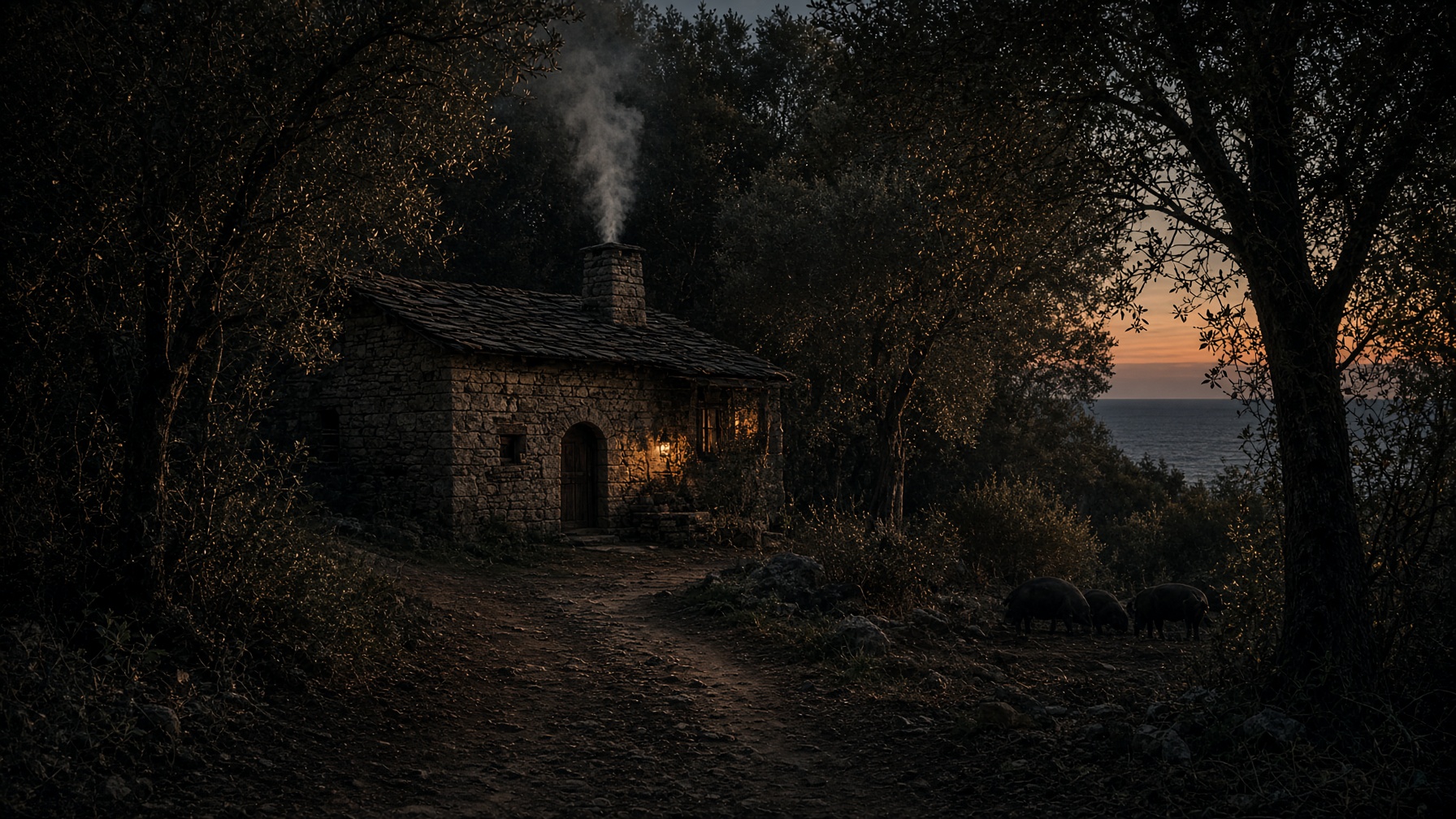
In the Odyssey she is a goddess who lives in a house in a clearing, who drugs guests and turns them into animals, and who, once matched and sworn, becomes a host of a different kind.
The transformation of the crew is a story about what a guest may become in a house that does not share his nature. Odysseus, warned and protected, does not drink as they drink. He stays a man in a place that unmakes men.
A year passes. The delay is real. So is the instruction she finally gives: you cannot go home until you have gone under. Circe is the one who sends him to the dead. That office is not erotic. It is technical and terrible.
When they leave, she bathes, clothes, and advises them. The poem can hold a dangerous woman without reducing her to the danger men later needed her to be.
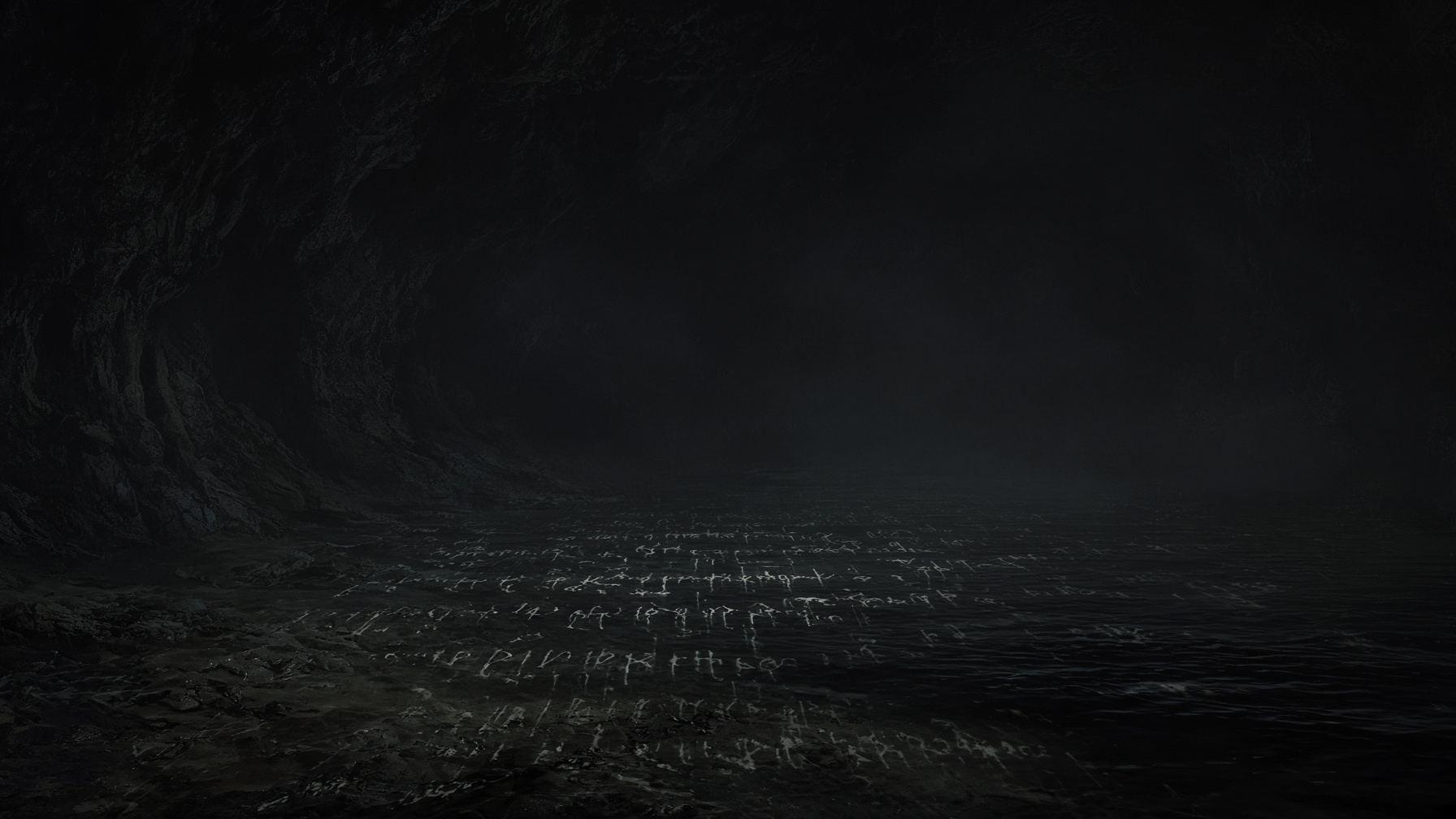
Katabasis
Names arriving out of darkness
What he carries back is not a trophy.
Elpenor
A young man unburied after a fall from Circe’s roof. The first news from death is a logistics of care: bury me.
Tiresias
The condition of return: restrain the crew from the sun’s cattle. Even then homecoming will be hard. After home, another road still waits.
Anticleia
His mother. She died of longing.
Agamemnon
How a homecoming can be a murder.
Achilles
He would rather be a hired hand among the living than king among the dead.
Ajax
Will not speak.
The underworld of the Odyssey is not a moral furnace. It is a shore of blood and voice. Odysseus digs a pit, pours offerings, and holds the dead back with a sword until the seer has spoken.
What he carries back is information, grief, and a warning about houses.
Generated interpretation, not a historical record. Descent without decorative fire. A shore of blood and voice, not a moral furnace.
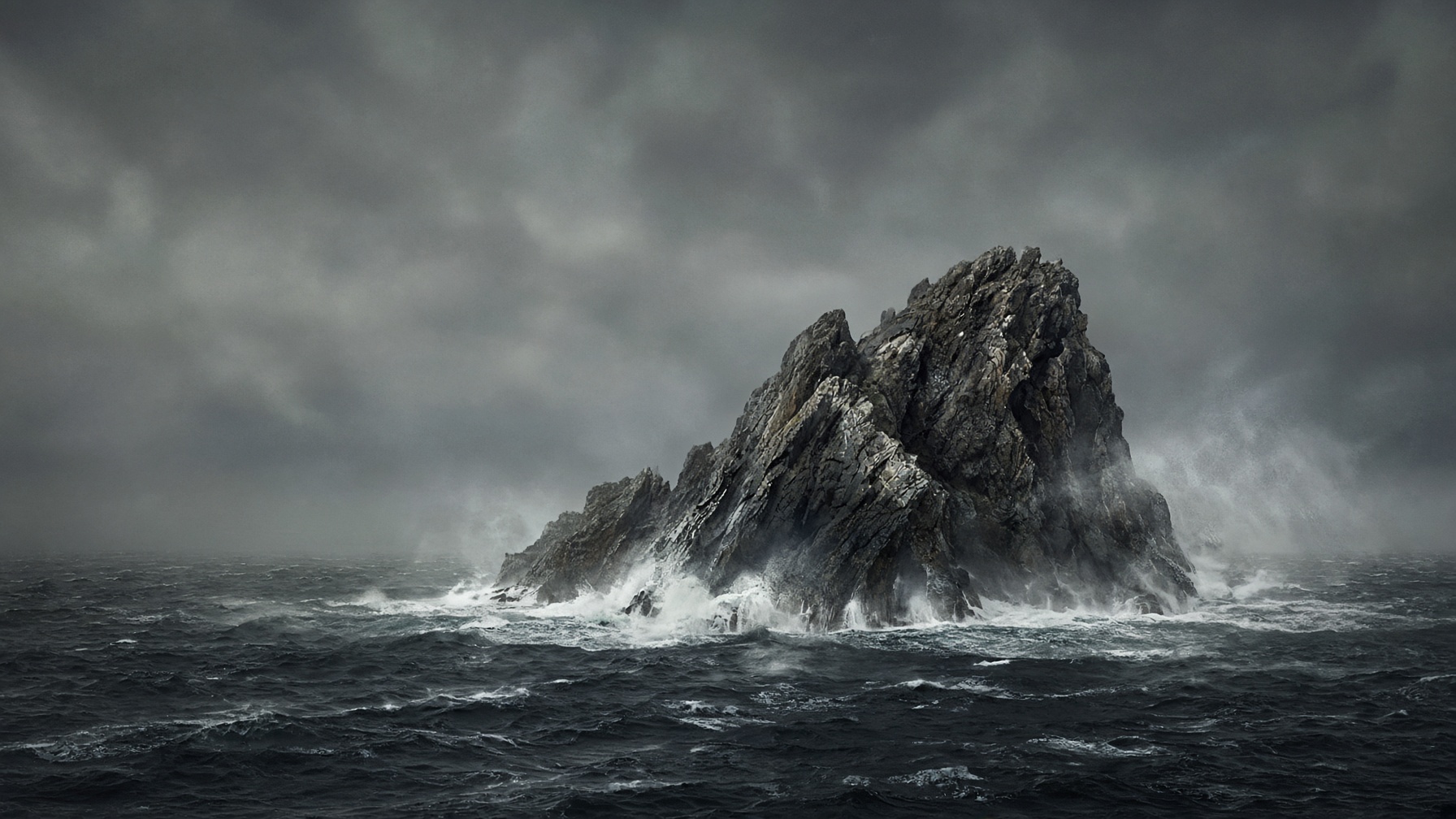
Sound
They sing what you already want to know
The Sirens’ promise, in the poem, is knowledge: they know whatever happened at Troy, and whatever happens on the earth. The danger is not a body on a rock. It is a song that makes the listener stop being a traveler.
Crew
Wax
Circe’s instruction is practical. Wax in the ears of the crew. Silence is part of the material.
Mast
Bound
The captain bound to the mast. He may hear. He may not steer.
Later European painting will fill this scene with nude women. That inheritance stays off this page unless a reception note is doing reception work. Here the subject is attention, binding, and the cost of wanting to know everything while still trying to get home.
Two dangers
Scylla and Charybdis

Cliff
Scylla
Six heads. Six men taken, if you pass close. Circe says: better to lose six than the ship. Odysseus, against advice, arms himself anyway. The men are taken while he watches. He says later it was the most piteous sight of all his sailing.
Whirl
Charybdis
A swallow of the whole sea, three times a day. To pass near her is to gamble the hull. Later, after the last ship is gone, he will hang from a fig tree over her basin and wait for timber. The strait is not a puzzle with a clever answer. It is a choice between kinds of loss.
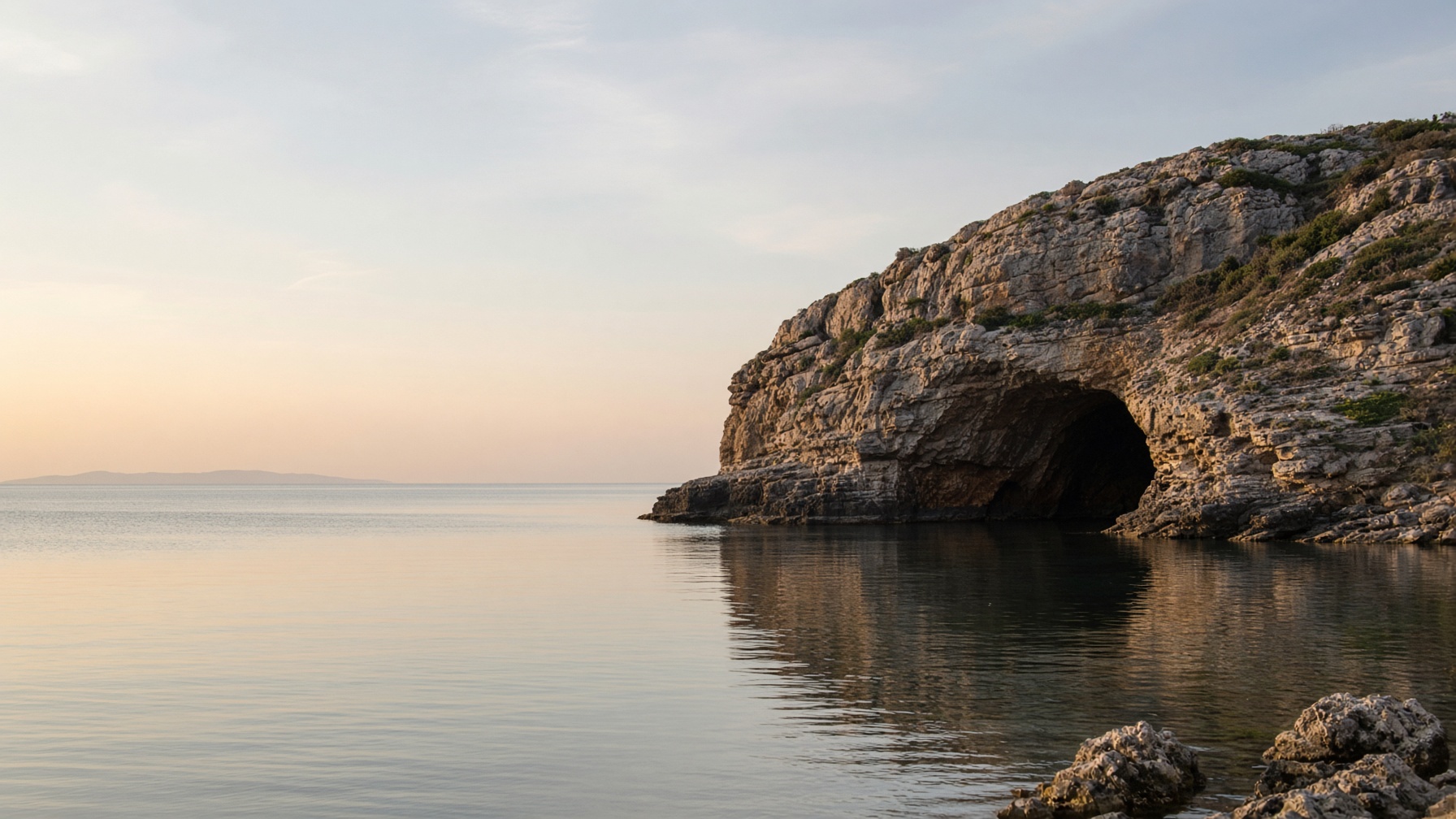
Ogygia
Time held
Calypso’s name is related to covering, hiding. For seven years Odysseus lives in a place that conceals him from the story he is supposed to finish.
Offered
A life that would not end
She offers immortality. She weeps when Hermes brings the order to release him. The poem lets her be magnificent and lonely.
Chosen
A life that will
It also lets Odysseus sit on the shore and want a mortal wife and a mortal death in his own place. The choice is not a sermon about resisting women. It is a decision about time: whether to step out of human duration, or to re-enter a life that will end.
He builds the raft with her tools. Even release requires labor. When the sea takes the raft, the years on Ogygia have not prepared a harbor. They have only delayed the last crossing.
Scheria
A guest is a story that has not yet given its name.
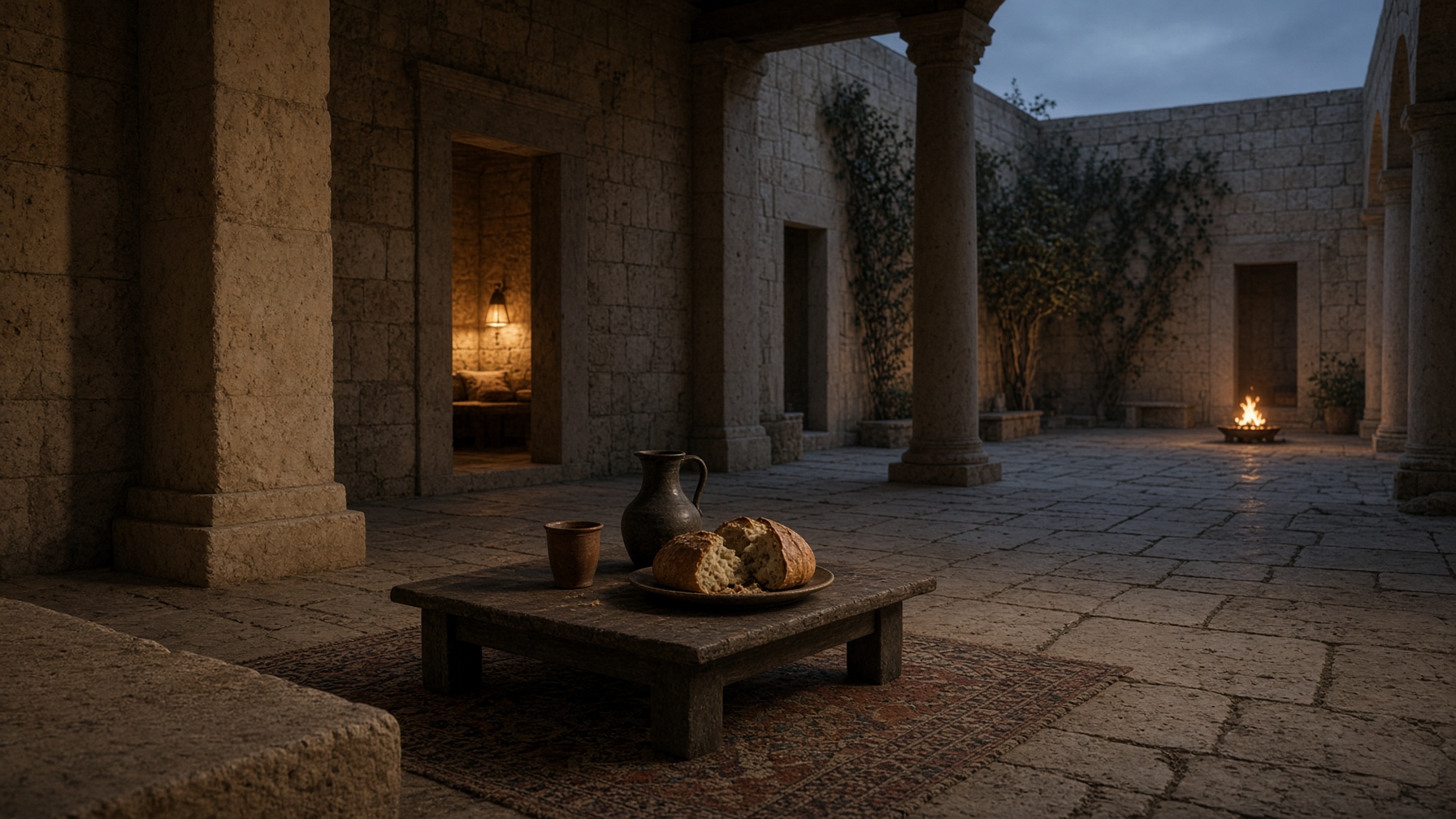
01
Nausicaa
Washed ashore, naked, Odysseus meets Nausicaa at the laundry pits. She does not mock him. She gives clothing, food, and a path to her parents’ house that will not compromise her. The first human help after the wreck is a young woman’s precise social intelligence.
02
The hall
In the hall of Alcinous the Phaeacians feed him before they demand his lineage. That order is xenia: the guest’s hunger is older than the host’s curiosity. Later they will want the name. First they give him a place to sit.
03
The name
He weeps when a bard sings Troy. Asked who he is, he finally tells the long tale that occupies the poem’s middle. Identity, here, is not a passport. It is a narration offered in a hall that knows how to hear.
The Phaeacians convey him home in a ship that needs no steering. Poseidon petrifies that ship on its return. Even a last kindness can be punished. Arrival is not reconciliation with the god of the road.
Two roads
Odysseus moves. Penelope holds.
Geographic
Odysseus
His road is water, islands, deaths, and a body that keeps surviving. He lies, raids, weeps, eats, and calculates. Space is the medium of his change. By the time he reaches Ithaca he has been Nobody, a beggar in training, a narrator, a man who refused to live forever.
The sea taught him that a name can save you and then damn you. He will need that lesson in his own hall.
Domestic
Penelope
Her road is a house under siege. Suitors eat the livelihood of the son. She weaves a shroud for Laertes by day and unweaves it by night. The ruse is not dainty. It is time stolen from men who would close her story.
She governs stores, speech, and the threshold of her room. She tests. She waits without agreeing that waiting is all she is. Uncertainty is her weather: is he dead, is the stranger a lie, is the son about to die for a father who may never come?
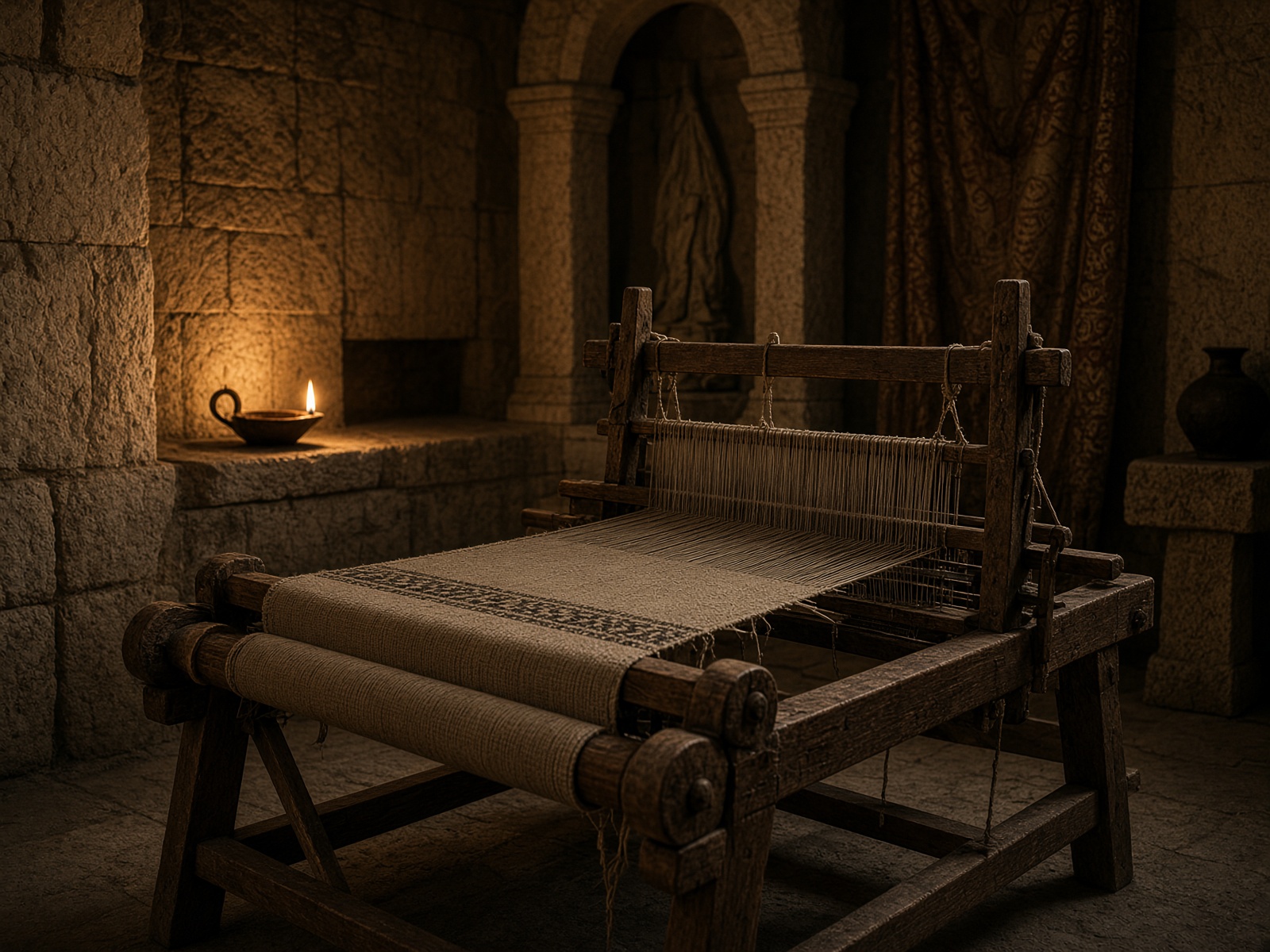
These are not the same journey in different costumes. One crosses water. One keeps a space from becoming someone else’s. If the poem is only read as a male adventure with a prize at the end, Penelope becomes furniture. She is not furniture. She is the other epic inside the epic.
Telemachus
A journey in search of a missing origin
01
TraditionalPylos and Sparta
The first four books belong to the son. Athena sends him out, not to Troy, not to monsters, to Pylos and Sparta, to ask men who knew his father whether the name Odysseus still refers to a living man.
02
TraditionalA house he cannot yet govern
He leaves a house he cannot yet govern. He is nearly ambushed on return. His journey is short in miles and large in office: he must become a person who can sit beside a father without remaining a child in a plundered hall.
03
What he brings
This is not prologue filler. It is another shape: departure in search of knowledge of origin. He does not bring Odysseus back. He brings news, gifts, and a self that can recognize a beggar as something more when the time comes.
Anagnorisis
Different people recognize differently
01
Argos
The old dog knows him by body and dies. Recognition without speech, without politics, without doubt.
02
Eumaeus
The swineherd feeds the beggar and does not yet know. Loyalty precedes knowledge. The poem lets love operate before proof.
03
Eurycleia
Washing the stranger’s feet, she finds the scar from the boar. Touch reads what disguise covers. Odysseus catches her throat to keep the name from the hall.
04
Telemachus
The father reveals himself to the son in private. Weapons are later removed from the hall. Recognition here is a conspiracy of restoration.
05
Penelope
She does not trust the face. She tests the man with a fact only a husband would have in his body: the bed.
06
Laertes
Even after the suitors, a father must be given signs, orchard trees counted in childhood, before grief can turn.
Greek criticism named this movement anagnorisis: recognition, the change from ignorance to knowledge. Aristotle uses the term in the Poetics; it is not a Homeric word. The Odyssey nevertheless builds one of the richest recognition sequences that survive from the ancient world. The later term is used here with that history attached, not as a magic key.
Bed
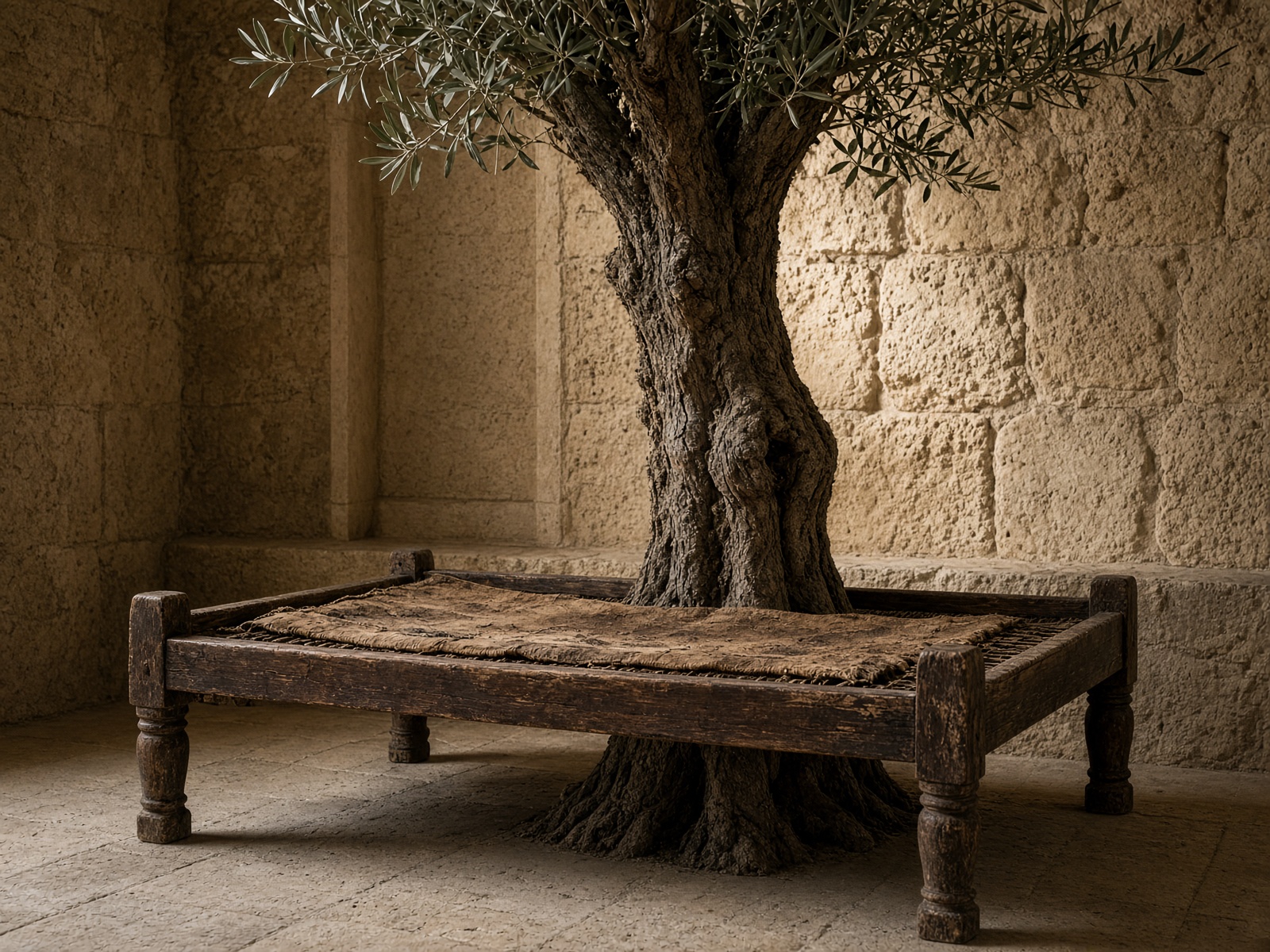
First the textual fact. Odysseus built the marriage bed around a living olive tree, in the courtyard, the trunk as post, the chamber constructed around what could not be moved. Penelope orders the bed to be brought out for the stranger. If he is her husband, he will flinch. He does. He describes the building of it. He knows the tree is still in the floor.
The test is not a riddle for its own sake. Appearance has been unreliable for twenty years, beggars, rumors, gods in disguise. Shared knowledge of a made thing, a private architecture, is harder to fake than a face.
Only after the bed is the recognition complete. The poem has taken its time. It should. A house that has been under siege cannot afford to believe a story just because the story wants to end.
He comes home. Home still asks who he is.
After
What came back, and what did not
What came back
A man, a scar, a store of lies that can also be used as justice. Knowledge of the dead. A son old enough to stand in the hall. A marriage that can resume because it had a structure deeper than absence. A reputation that will outlive the body.
What did not
The crew. The fleet. Twenty years of the child’s life. The dog. The easy fit between name and person. Innocence about what a homecoming costs other people, the suitors’ families will come for blood, and Athena will have to freeze a civil war.
The poem ends not in a hug but in a negotiation with further violence. Return is not purity. It is a new political problem in an old place.
Source
What we are reading when we say Homer
There is no single object called “the original Odyssey.” What survives is a tradition of performance, then a written Greek poem in dactylic hexameter, transmitted through medieval manuscripts, printed in critical editions, and translated.
Those layers stay apart. A modern novelization is not Homer. A film is reception. A translation is already an interpretation; when the wording matters, the translator is named.
Reception
The wrong island, and the English letters
The name in the poem
Ἰθάκη is a different sum
The Odyssey’s Ithaca is a small rocky kingdom in the Ionian Sea, about 38°N. The Greek is Ἰθάκη: iota, theta, alpha, kappa, eta. Greek isopsephy of that spelling is not forty-two. Odysseus does not come home to New York, and Homer is not doing English letter-math.
The English spelling
ITHACA is not Ἰθάκη
The C that is not kappa makes a later spelling. Cipher of that spelling follows. A miss is drawn as carefully as a hit. Four faces. No blend.
Ithaca, New York, named 1804 after the island, sits about 42°26′N and wears the English name. Douglas Adams’s 42 is the answer whose question was lost. File both as reception. Do not back-read them into hexameter.
Cipher
ITHACA
Four faces. English letters only. Spaces ignored.
ITHACA
English Ordinal
I 9 T 20 H 8 A 1 C 3 A 1
42
ITHACA
Reverse Ordinal
I 18 T 7 H 19 A 26 C 24 A 26
120
ITHACA
Full Reduction
I 9 T 2 H 8 A 1 C 3 A 1
24
ITHACA
Reverse Reduction
I 9 T 7 H 1 A 8 C 6 A 8
39
English Ordinal forty-two. Full Reduction twenty-four. Reverse Ordinal one hundred twenty. Reverse Reduction thirty-nine. Two faces lock. Two do not. The wink is the pair that lands, not a blended total.
Forty-two is an invitation to ask a better question, not a verdict that Homer encoded a later alphabet. Ἰθάκη has no secure etymology. Pre-Greek, Beekes says: older than the Greek we can analyze. QUESTION, on Reverse Reduction, is forty-two. ANSWER is not. ODYSSEUS is not. The home-word locks. The hero’s English name does not. Cipher is not Homer.
Theory · last
Pattern later
Only now, after the road. Campbell can be used as a lens: departure, initiation, return. The Odyssey will partly fit and partly refuse. The crew does not return. Penelope’s plot is not Campbell’s plot. The hero is often a liar. The homecoming requires murder in the hall.
Van Gennep’s rites of passage (separation, limen, incorporation) illuminate the disguises and washings better than a twelve-stage wheel. Turner’s liminality helps name the years when Odysseus is neither king nor corpse. Propp’s functions were drawn from folktales, not from Homeric epic; resemblance is not identity of mechanism.
Use the map. Do not mistake it for the territory. The Odyssey taught depth. It is not the template on which every other road must be cut.
Verified in the collection
Relationships already established. Not an invitation to add more because they seem plausible.
Motifs
- The Road
Sea as road that erases crew.
- The Threshold
Cave door; later, the door of the hall.
- The Name
Outis / Odysseus.
- The Disguise
Beggar in the hall; weaver in the house.
- The Bed
The rooted olive.
- The Return
Return as recognition problem.
- The Home
A hall full of suitors.
- The Wound
Boar scar.
- The Object Carried Back
Almost no object; a rooted bed that never left.
- The Ship
Fleet, then none.
- The Guide
Circe, Tiresias, Nausicaa, Athena.
- The Cave
Polyphemus; Calypso.
Words
Objects
- The BedHomeric Greek
- The Bag of WindsHomeric Greek
Frameworks
- Joseph CampbellWeak fit
- Arnold van GennepVerified example
- Victor TurnerVerified example
- Vladimir ProppDifferent level of analysis
- JungDifferent level of analysis
Related roads
Another failed or costly return
OrpheusAnother descent
InannaAnother road without home
Ovid at TomisThe name of home, which we cannot securely gloss
IthacaForty-two as a seeking, not a verdict
QuestionThe object that finishes recognition
The bedAn object that almost completed the return
The bag of winds
epic · parallel