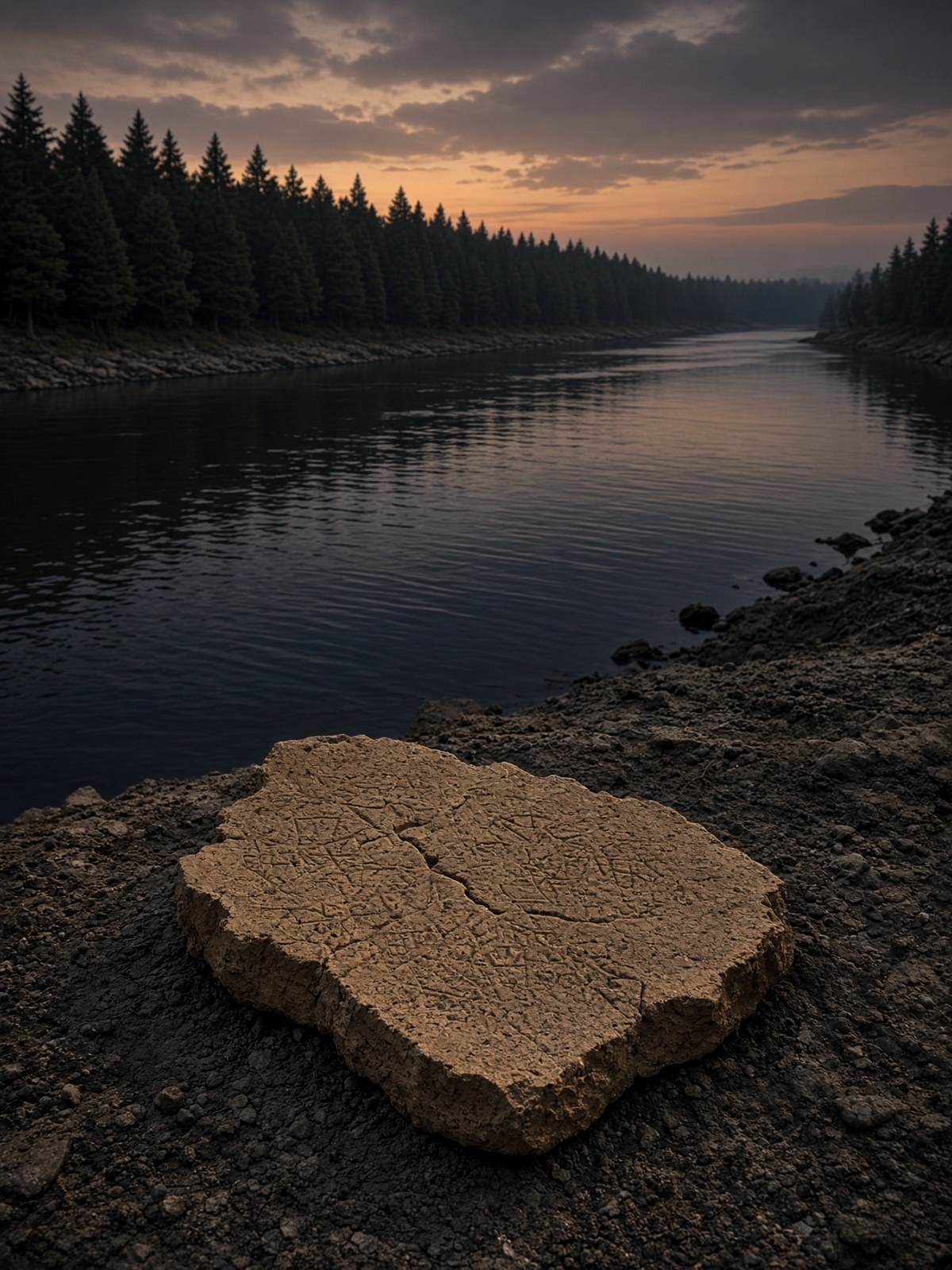
Uruk
Look at the walls.
Before the name
Do not stamp quest on the tablet
Do not stamp QUEST on the tablet before reading it. Gilgamesh is a king who oppresses his city, a friend who is made to match him, a pair who kill a forest guardian and insult a goddess, a man who watches that friend die, and a traveler who fails to bring life-without-death home.
If it is a quest, the object is refused by the world. What is achieved is knowledge that can be told from a wall.
Geography
A city of brick. A forest of argument. A water that is not a sea.
Uruk can be walked. The Cedar Forest has been argued onto Lebanon. Mashu and the waters of death are the poem’s own weather.
Uruk
CertainThe walls the poem asks you to look at. Archaeological Uruk, southern Iraq.
Cedar Forest
TraditionalLater placed in the Lebanon range. The poem gives a guarded wood, not a GPS pin.
Mount Mashu
Mythic / unlocatableThe path of the sun. Scorpion-beings. Darkness measured in double hours.
Waters of death
Mythic / unlocatableCrossed with stone poles that dissolve. Not the Mediterranean.
A line on this list is a claim about a kind of place. Certain, traditional, mythic. Similarity of cedar is not proof.
Before the long road
Enkidu is not a sidekick
Enkidu
Made to match him
The gods make Enkidu from clay to stand against Gilgamesh. He lives with animals until Shamhat, a cultic woman of Uruk, brings him into human diet, clothing, and sex. Civilization, in this poem, is a teaching of the body.
The two men wrestle and then become companions. They go to the Cedar Forest and kill Humbaba. They kill the Bull of Heaven after Gilgamesh rejects Ishtar. The gods decide that one of the pair must die. Enkidu dies slowly, cursing and then blessing the life that made him human.
Gilgamesh
Grief starts the road
Gilgamesh’s grief is the pressure that starts the later road. He does not leave Uruk because an adventure calls. He leaves because he has seen a body rot and understood that his own will too.
Enkidu
The body that starts the road
He leaves because he has seen a body rot.
Curse
Enkidu dies slowly. He curses the trapper and Shamhat, then blesses the life that made him human.
Watch
Gilgamesh will not give the body up. Grief here is duration, not a speech.
Skins
He puts on animal skins. Grief reverses the civilizing of the friend.
The gods decided that one of the pair must die. The later road is not an adventure that happens to include mourning. Mourning is the road.
The road
Toward Utnapishtim
01
The wild
He wears animal skins, lets his hair grow, becomes almost the creature Enkidu once was. Grief reverses the civilizing of the friend.
02
Mythic / unlocatableMount Mashu
Scorpion-beings guard the path of the sun. He passes through darkness toward the garden and the sea.
03
Siduri
A tavern-keeper at the edge of the waters. She tells him to eat, bathe, hold a child. The poem lets ordinary life speak against the search.
04
Mythic / unlocatableWaters of death
Urshanabi the ferryman. The stone punting poles. A crossing that is not a battle.
05
Utnapishtim
The flood survivor, set apart by the gods. He tells the flood. He offers a test: stay awake. Gilgamesh sleeps. Immortality is not won.
06
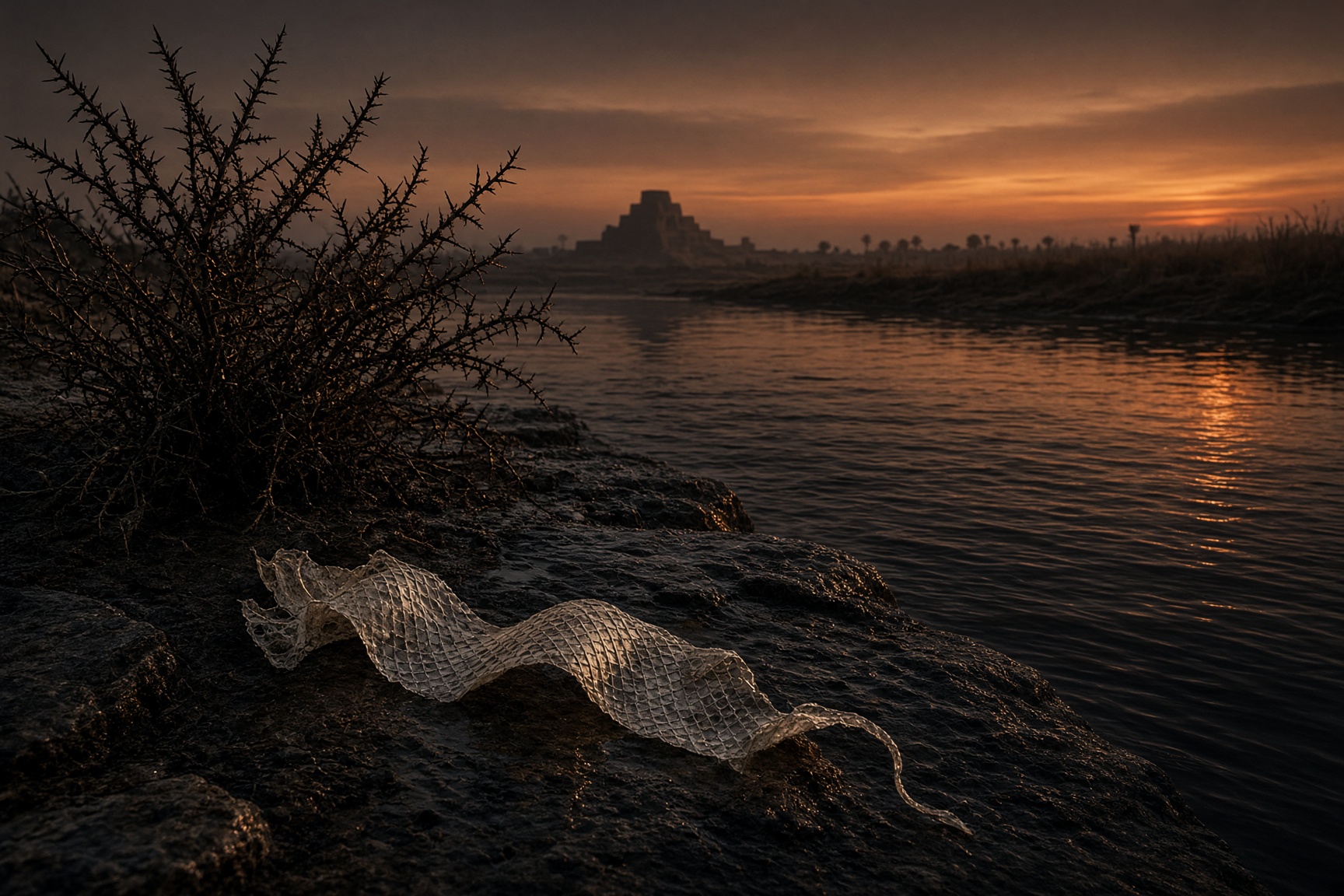
The plant
A consolation prize: a thorned plant of rejuvenation. A snake takes it while he bathes. Even the lesser object is not carried home.
The plant
Even the lesser object is not carried home
Utnapishtim’s test is staying awake. Gilgamesh sleeps. The plant is a consolation: youth again, not exemption from death. He ties stones to his feet and fetches it from the deep. While he bathes, a snake takes the scent and the skin.
What returns to Uruk is a story about a wall. The plant does not.
A snake takes it while he bathes.
Return
The walls are the boon
What came back
A city that can be walked
He comes back to Uruk and tells the ferryman, and the reader, to inspect the city’s brickwork, the inner and outer walls, the temple of Ishtar. The poem that opened with this inspection closes with it.
A story of the flood, a knowledge of limit, a king perhaps altered by failure.
What did not
Enkidu, youth, the plant
Enkidu. Youth. The plant of rejuvenation. Exemption from death. The original object is refused by the world.
Later reception will call this the first epic, the first friend, the first midlife journey. Those are our categories. The Standard Babylonian poem calls itself, in its incipit, a story of one who saw the deep.
Source
Versions, not a novel
Old Babylonian fragments and the Standard Babylonian twelve-tablet poem associated with Sîn-lēqi-unninni are not the same text. Tablet XII, related to a Sumerian Gilgamesh and the Netherworld, sits awkwardly with the rest. Andrew George’s edition is the scholarly baseline in English. Popular retellings (Mitchell and others) must be labeled as such.
Theory · last
Pattern later
Campbell liked this poem. Friendship, night-sea, apotheosis refused, the monomyth can be pasted on. What it smears is the civic ending: the wall, not the inner sun. Classify carefully. Spiral, if you need a shape: he returns to the same city able to see it.
Verified in the collection
Relationships already established. Not an invitation to add more because they seem plausible.
Motifs
- The Name
A name that wants to outlive death and cannot.
- The Home
Walls as what can be shown.
- The Wound
The friend’s death.
- The Object Carried Back
The stolen plant.
Words
Objects
- The PlantAkkadian
Frameworks
- Joseph CampbellWeak fit
Related roads
Another return with the crew missing
The OdysseyAnother Mesopotamian road through death
InannaWhat did not come back
The plant
epic · spiral