Joppa
He went the other way.
A charge, a fare, a storm
Refusal here is not a mood. It is a ticket.
01
The word of the Lord comes to Jonah: go to Nineveh, the great Assyrian city, and cry against it. Jonah rises, and flees toward Tarshish, a far western destination, the geographic opposite of the charge. He pays fare at Joppa. Refusal here is not a mood. It is a ticket.
02
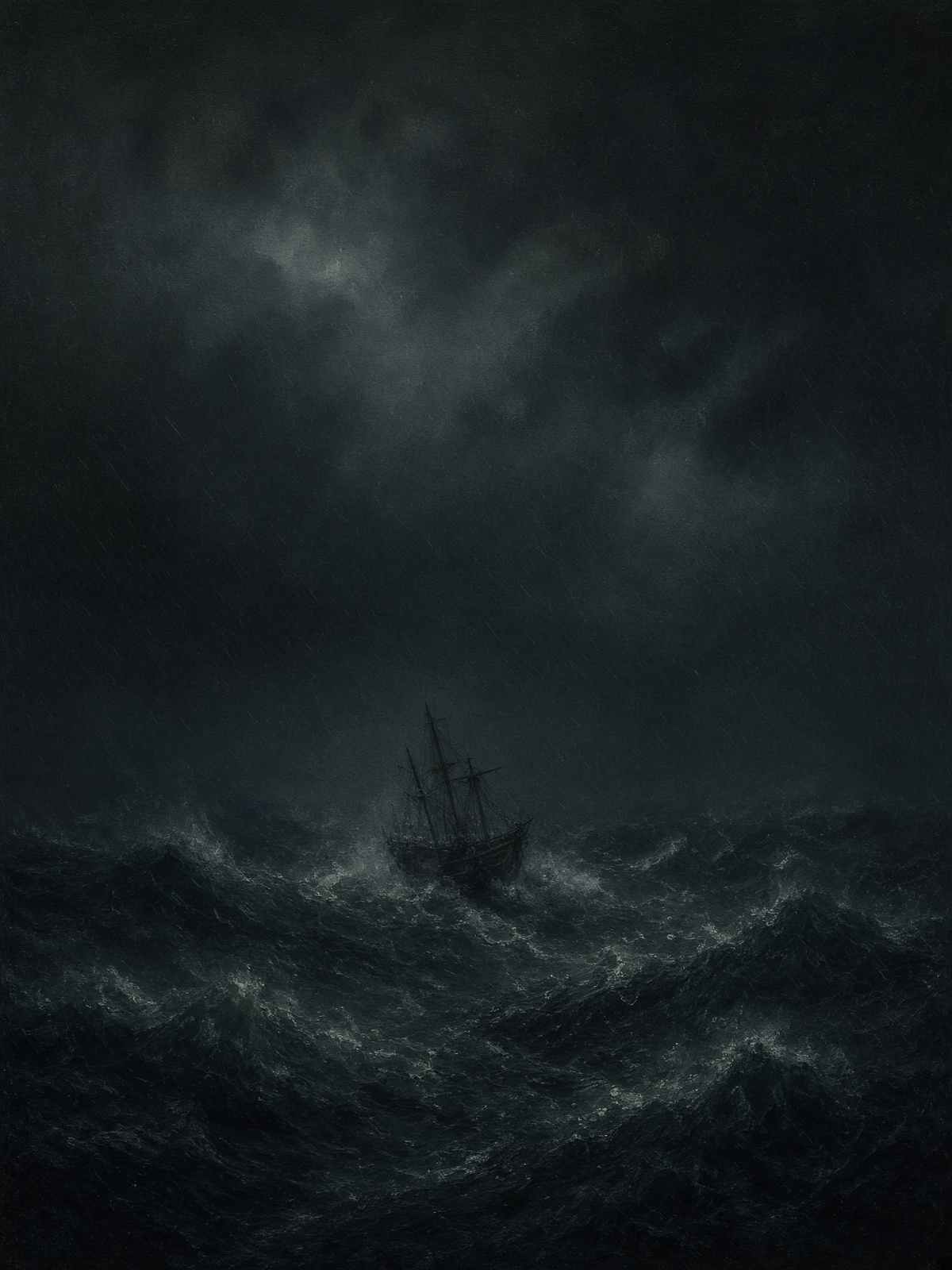
The sea rises. The sailors, depicted with more decency than the prophet, pray to their own gods, lighten cargo, and finally, at Jonah’s instruction, throw him overboard. The sea stills. A great fish swallows him. After three days he is vomited onto land and told again: go.
03
He goes. Nineveh repents, to his anger. God argues with him over a plant that shaded his head and died. The book ends on a question about pity, for a city of people who do not know their right hand from their left, and also much cattle.
Refusal
Not Campbell’s stage with a beard
Twentieth-century popular Joseph Campbell will call this ‘refusal of the call.’ The Hebrew tale has its own theology: prophecy, the nations, the scandal of mercy toward an enemy city. To extract a universal stage is to throw the sailors, the plant, and the cattle overboard.
Keep refusal as a journey shape: a road not taken, then a second road taken under pressure. The meaning is in the resistance, not in the eventual compliance as ‘the real story.’
Theory · last
Pattern later
If you need a comparative note: flight by sea, enclosure, second sending. Then stop. The Book of Jonah is short enough to reread without a wheel.
Sources
Source text
Book of Jonah. Hebrew Bible / Tanakh.
Modern scholarship
Simon, Uriel. Jonah. JPS Bible Commentary. Jewish Publication Society, 1999.
Verified in the collection
Relationships already established. Not an invitation to add more because they seem plausible.
Related roads
Another sea that delays a charge toward home or city
The OdysseyAnother road whose destination is a city with a claim on the traveler
The Camino
journey · refusal